Emergencies
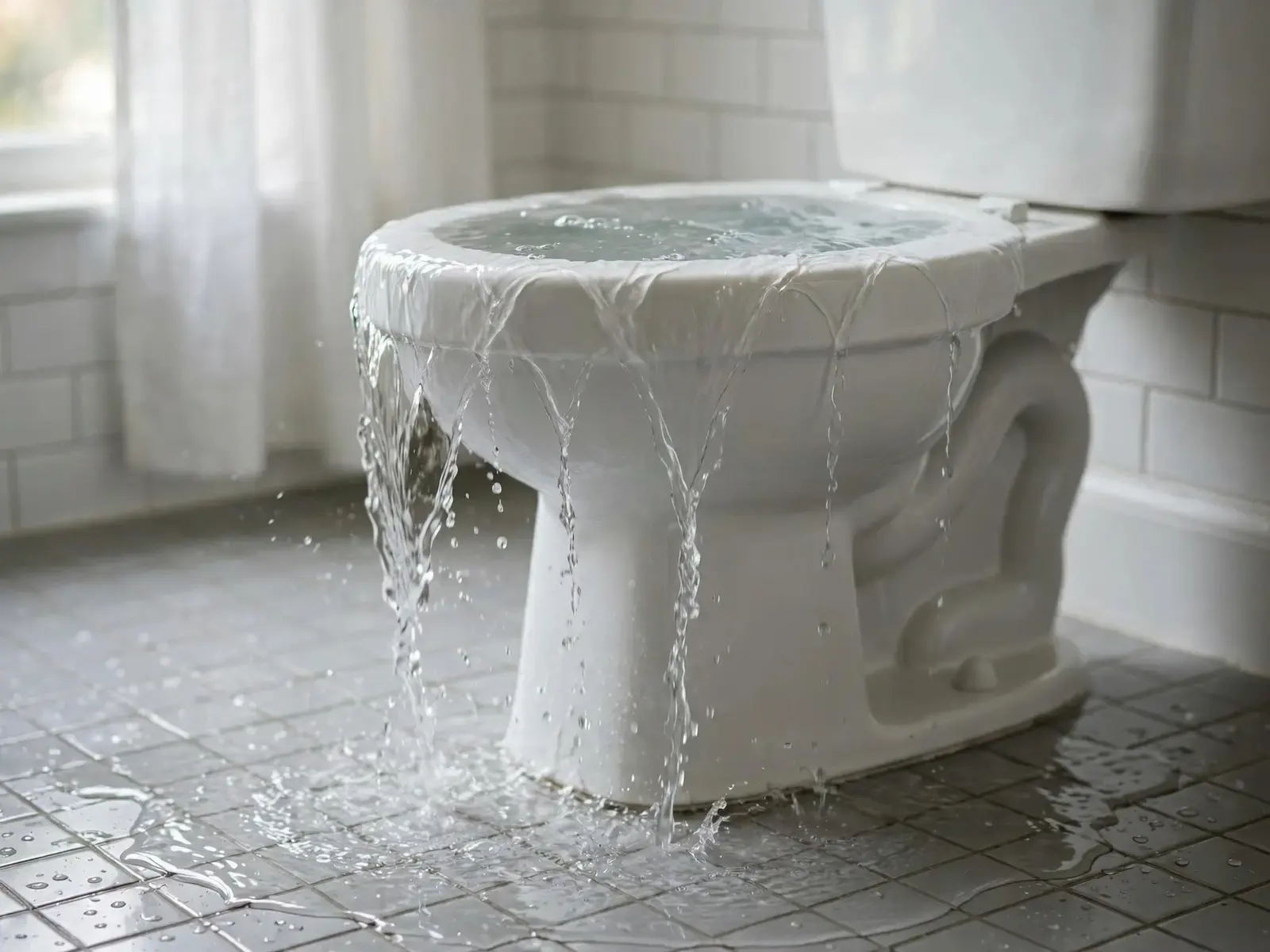
Toilet Overflowing? What to Do Right Now
Updated · By the Keystream Plumbing editorial team · How we research
Step 1: Stop more water from coming in
Take the lid off the tank and press the rubber flapper at the bottom back onto its seat. That stops water flowing from the tank into the bowl. Then lift the float or the fill valve arm so the tank stops refilling.
Turn the oval handle on the supply line behind the toilet clockwise until it stops. If that valve is stuck or leaks, close the main shutoff for the house. Our guide to shutting off the water to your house shows where it usually is.
Step 2: Protect the floor and the ceiling below
Soak up the water with towels right away. Overflow water that sits on a bathroom floor runs under the toilet and the vinyl or tile and into the ceiling below. If the bathroom is upstairs, check the ceiling underneath for drips and turn off any light fixture that gets wet.
If the bowl water contained waste, wear gloves and disinfect the floor afterward.
Step 3: Clear the clog
Use a flange plunger, the kind with a soft extension on the bottom, which seals into the toilet outlet. Push down gently first to push out air, then plunge firmly 10 to 15 times while keeping the seal. A cup plunger made for sinks does not seal well in a toilet.
If plunging does not work, a closet auger, a short hand snake with a protective sleeve, reaches through the trap without scratching the porcelain.
- Do not keep flushing to test it; each flush can overflow again
- Do not pour chemical drain cleaner into a toilet; it rarely clears paper or wipes and leaves a caustic bowl for whoever works on it next
Step 4: Check whether it is more than the toilet
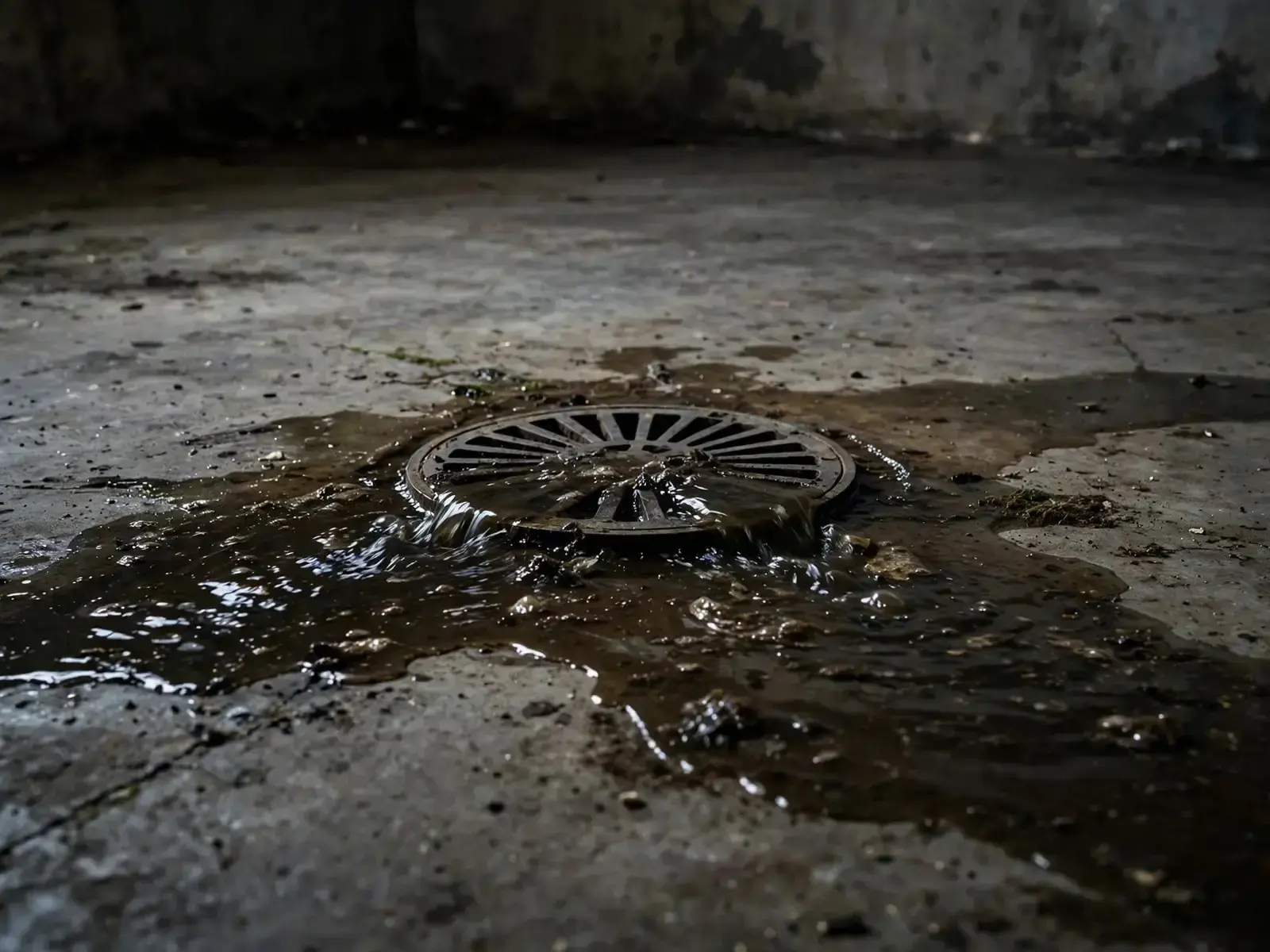
Run water in the nearest sink and tub. If water comes up in the tub or shower when the toilet is flushed, or several drains are slow at the same time, the clog is in the main line, not the toilet. Plunging will not fix that, and every flush pushes sewage toward the lowest drain in the house. Stop using water and call for drain cleaning.
When to call a plumber
Call when the toilet overflows again after you clear it, when you suspect an object such as a toy or a phone is stuck, when water appears around the base after flushing, or when the main line is the problem. See toilet repair for what the plumber checks.
Frequently asked questions
Why does my toilet keep overflowing?
A partial clog in the trapway, a flushed object, a blocked vent, or a main sewer line clog are the common causes. If it overflows again after plunging, the blockage is further down the line.
Can a toilet overflow without a clog?
Yes. A fill valve set too high or a failed fill valve can overflow the tank into the overflow tube and, rarely, past it. Look at the water level in the tank: it should sit about an inch below the top of the overflow tube.
Is toilet overflow water dangerous?
Water from the bowl can carry bacteria. Wear gloves, clean hard surfaces with a disinfectant, and wash or discard soaked rugs and towels.
Editorial note: This guide is general information for homeowners, not a substitute for an on-site assessment. Local codes and conditions vary; a licensed pro can confirm what applies to your home. See our editorial policy.