Emergencies
Sewage Backing Up in the Basement: What to Do
Updated · By the Keystream Plumbing editorial team · How we research
Why sewage comes up in the basement
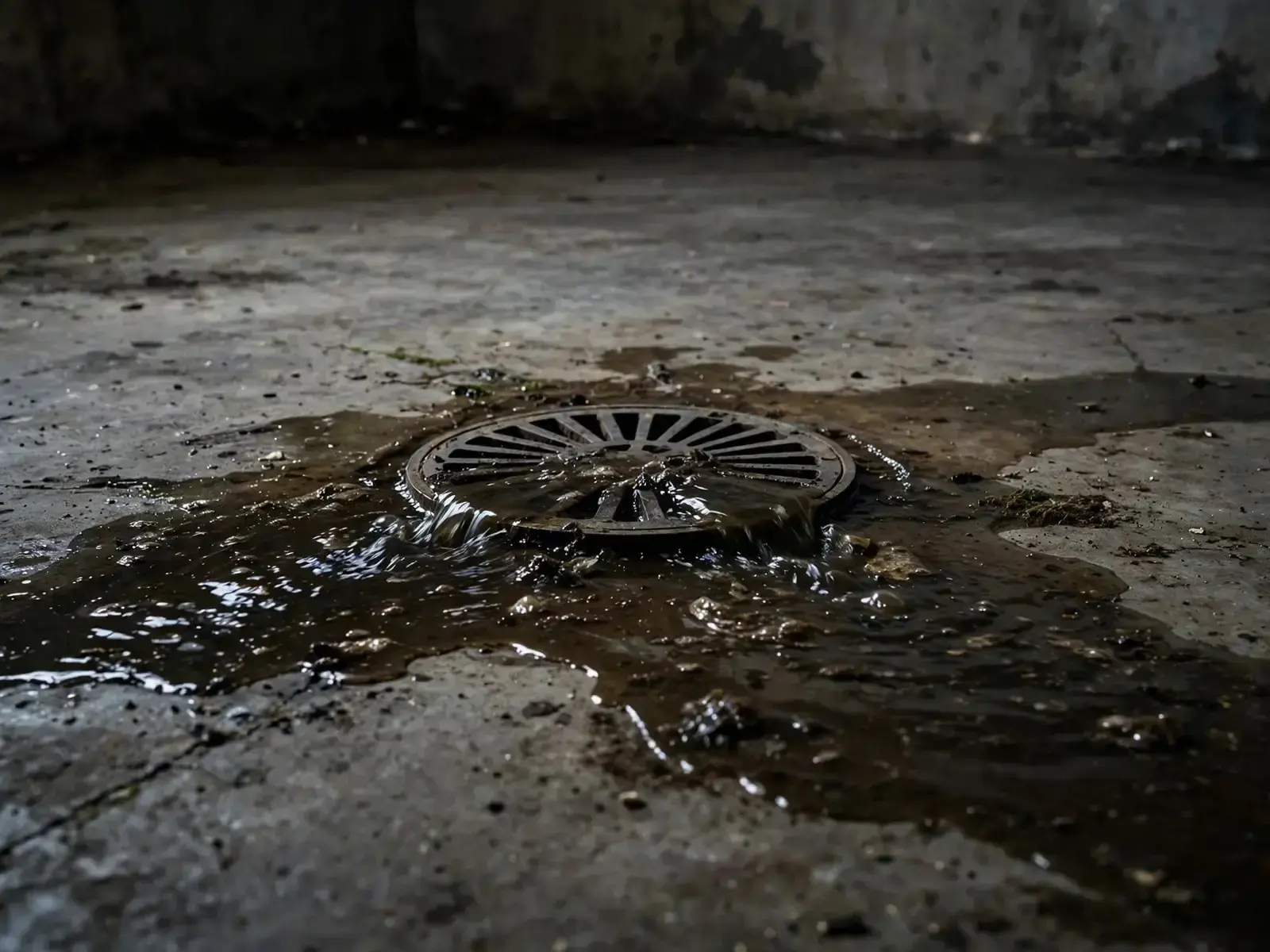
The basement floor drain, shower or toilet is the lowest opening in the plumbing. When the main sewer line is blocked, everything you flush or drain upstairs has nowhere to go and rises at that lowest point.
There are two very different causes. A blockage in your own building sewer, from roots, wipes, grease or a broken pipe, backs up only your house. An overloaded public sewer during heavy rain can back up into many houses on the street at once. The EPA notes that sanitary sewer overflows are often caused by blockages, structural failures and heavy rain entering the system.
What to do right now
- Stop all water use: no flushing, no laundry, no dishwasher, no showers
- Keep people and pets out of the affected area
- Turn off power to the basement at the panel if water is near outlets or appliances and you can reach the panel without standing in water
- Do not run a wet vac on sewage that is still rising; it will keep coming
- Photograph everything for insurance before cleanup
Your line or the city's?
Ask neighbors whether their basements backed up too, especially during a storm. If they did, call the sewer utility's emergency line first. If only your house is affected, the blockage is most likely in your building sewer and a plumber needs to clear it from a cleanout. See sewer line repair for what the camera inspection afterward shows.
Cleanup
Sewage is category 3 water: it carries bacteria and viruses. Hard surfaces can be cleaned and disinfected, but drywall, insulation, carpet and pad that sewage soaked are usually removed. For anything more than a small area, a water damage restoration company is the right call.
Preventing the next one
A backwater valve on the main sewer line closes when sewage flows the wrong way, which is the main protection against city sewer surcharges. For your own line, avoid flushing wipes and pouring grease down drains, and have a line with roots cleaned on a schedule. Our guide to main sewer line clog signs lists the early warnings.
Frequently asked questions
Does homeowners insurance cover sewage backup?
Standard homeowners policies often exclude sewer backup unless you added a sewer or water backup endorsement. Check your policy and call your insurer before cleanup if you can.
Can I use my upstairs bathroom during a sewage backup?
No. Everything upstairs drains through the same main line, so using it pushes more sewage into the basement until the blockage is cleared.
Who pays if the city sewer caused the backup?
Some cities have a claims process when the public sewer was at fault. Report it to the sewer utility right away and keep photos and invoices.
Sources
- Sanitary sewer overflows, US Environmental Protection Agency
Editorial note: This guide is general information for homeowners, not a substitute for an on-site assessment. Local codes and conditions vary; a licensed pro can confirm what applies to your home. See our editorial policy.