Emergencies
Sump Pump Not Working: Causes and What to Do
Updated · By the Keystream Plumbing editorial team · How we research
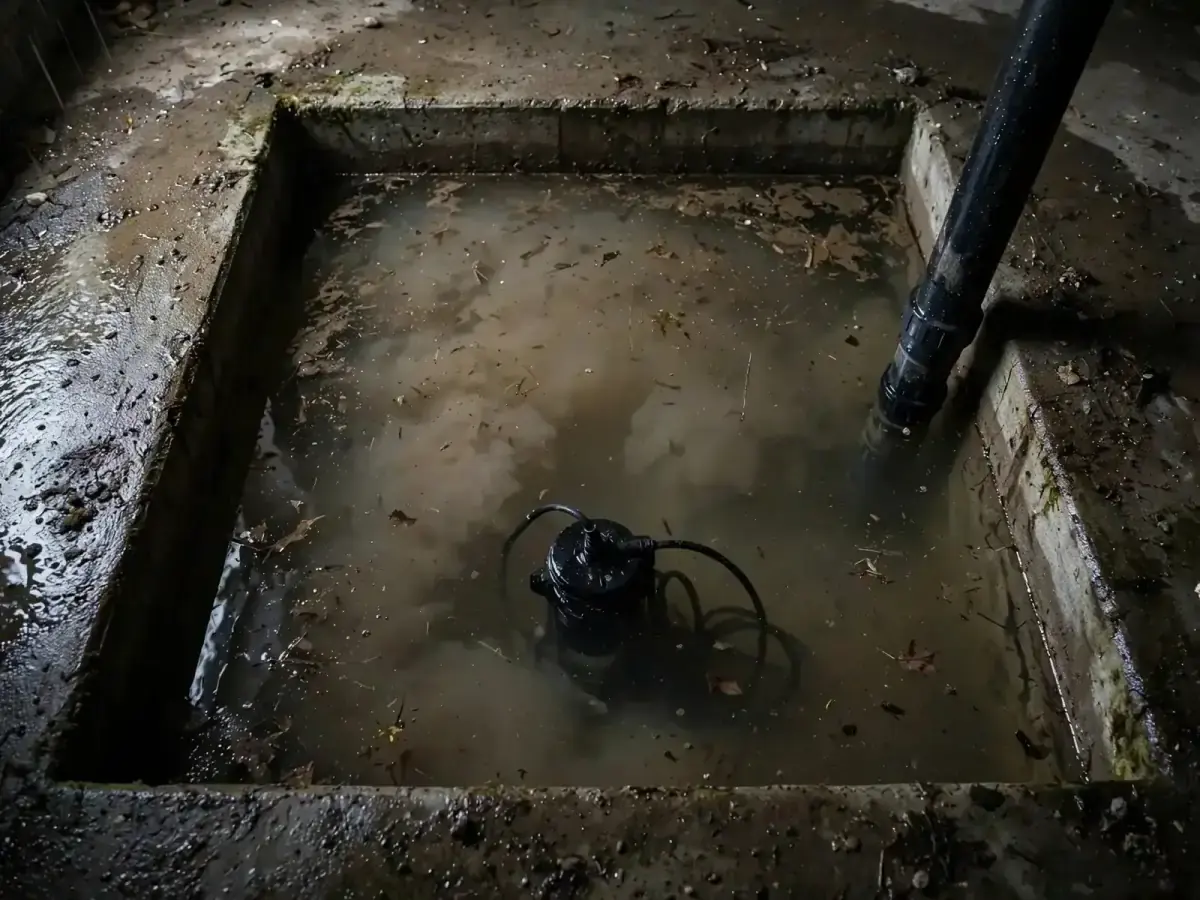
It will not turn on
Many sump pumps plug into a GFCI outlet that has tripped. Press reset, then check the breaker. Pour a bucket of water into the pit: if the float rises and the pump still does nothing, the switch or motor has failed. A float caught on the pit wall or the cord is a common, easy fix.
It runs but the water does not go down
- A check valve stuck open lets the water you just pumped run back into the pit
- A clogged intake screen starves the pump
- A frozen or blocked discharge line outside means the water has nowhere to go
- An impeller worn out or jammed with debris spins without moving water
It runs constantly
In heavy rain a pump may run constantly because water really is coming in that fast. In dry weather, constant running points to a stuck float switch, a check valve letting water back, or groundwater running high. If it never stops, the motor will overheat, so this needs attention soon.
If water is rising now
Move valuables off the floor, shut off power to the basement only if you can reach the panel without standing in water, and use a wet vac or a portable pump to keep up until help arrives. See sump pump service for repair and replacement.
Preventing a failure
Test the pump every few months and before storm season by filling the pit with water. Keep the discharge outlet clear of snow and ice. A battery or water-powered backup pump protects a finished basement during power outages, which often happen during the same storms that fill the pit.
Frequently asked questions
How long do sump pumps last?
Many last around 7 to 10 years, depending on how often they run and what is in the water. A pump that runs often in a high water table area may need replacing sooner.
Can a sump pump drain into the sewer?
Many cities prohibit sump pump connections to the sanitary sewer because they overload treatment plants. The discharge usually goes to the yard or a storm system. Check local rules.
Why does my sump pump smell?
A dry pit can let sewer gas or stagnant water odor into the basement. Pouring water in to cycle the pump and cleaning the pit usually helps.
Editorial note: This guide is general information for homeowners, not a substitute for an on-site assessment. Local codes and conditions vary; a licensed pro can confirm what applies to your home. See our editorial policy.