Water heaters
Water Heater Relief Valve Leaking or Dripping
Updated · By the Keystream Plumbing editorial team · How we research
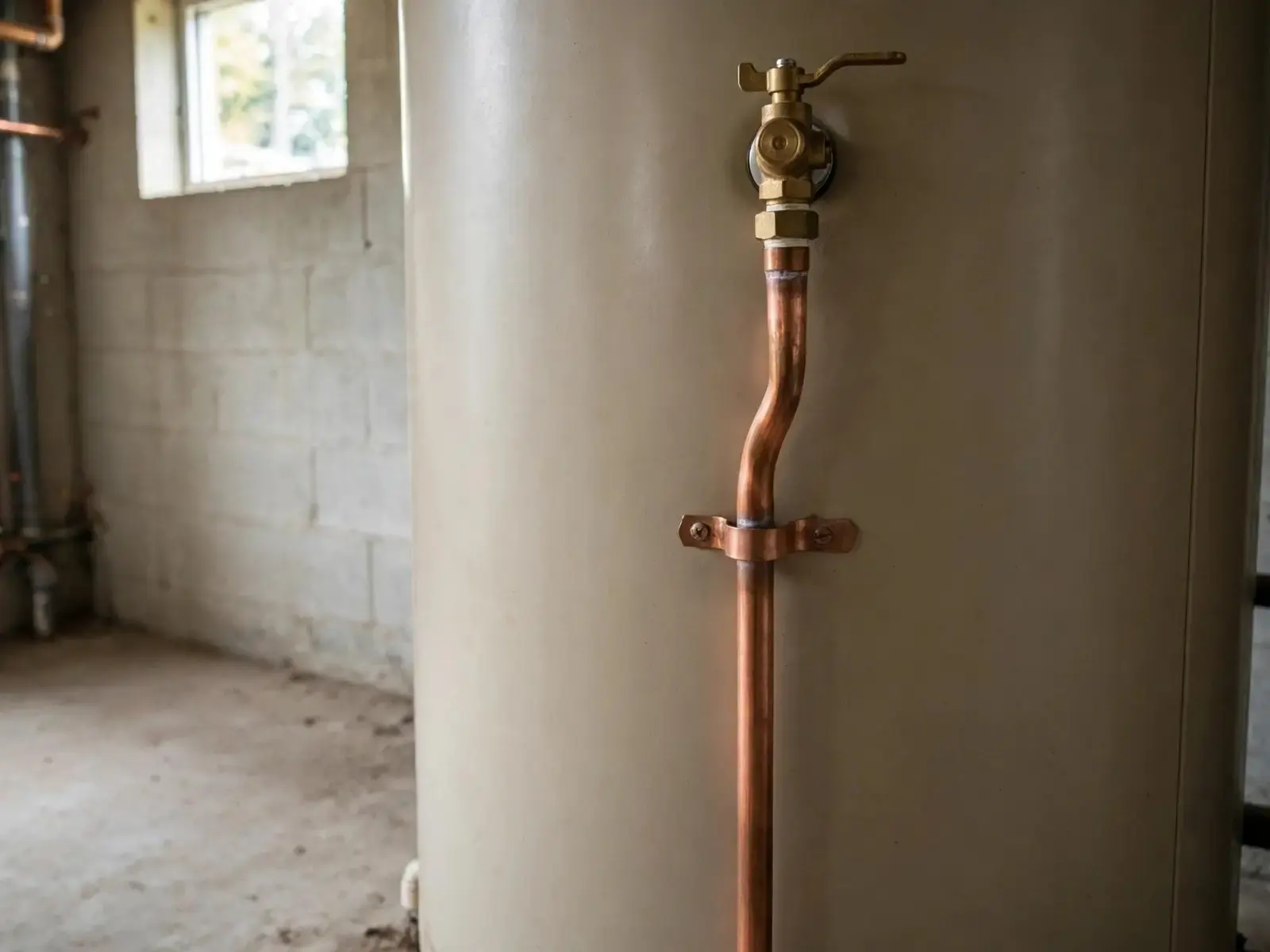
What the valve is for
The T&P valve on the top or side of the tank opens if the water gets too hot or the pressure too high, so the tank cannot fail dangerously. Its discharge pipe runs down toward the floor or a drain so hot water is released safely.
Why it drips
- Thermal expansion: water expands as it heats; in a home with a check valve or pressure regulator, there is nowhere for it to go unless an expansion tank absorbs it
- High street pressure: above about 80 psi, codes commonly call for a pressure-reducing valve
- Temperature set too high or a thermostat that sticks
- A worn or dirty valve seat that no longer closes fully, especially after it has been opened
What you can check
Buy a pressure gauge that screws onto a hose bib and check the house pressure; between about 40 and 80 psi is the normal range. Tap the expansion tank if you have one: a hollow sound at the top is good, a solid sound means it is waterlogged. Check the thermostat setting; about 120°F suits most homes.
What never to do
Do not plug, cap or remove the discharge pipe, and do not replace the valve with a plug. A blocked relief valve takes away the tank's last line of protection.
The fix
Depending on the cause, a plumber replaces the valve, installs or recharges an expansion tank, replaces a failing pressure-reducing valve, or fixes the thermostat. See water heater repair. If the valve is discharging a lot of hot water continuously, turn off the heater and call right away.
Frequently asked questions
Is a dripping relief valve dangerous?
The drip itself is not, but it means either the valve is worn or the pressure or temperature is too high. Both should be fixed promptly.
Can I replace a T&P valve myself?
It must be the correct rating for the heater and the discharge pipe must meet code. Many owners have a plumber do it, since the cause also needs to be found.
Why does my relief valve drip only at night?
At night little water is used, so pressure from thermal expansion or high street pressure builds up. That points to a missing or failed expansion tank or a pressure regulator problem.
Editorial note: This guide is general information for homeowners, not a substitute for an on-site assessment. Local codes and conditions vary; a licensed pro can confirm what applies to your home. See our editorial policy.