Emergencies
How to Repair a Main Water Line
Updated · By the Keystream Plumbing editorial team · How we research
What the main water line is
The main water line, also called the water service line, is the pipe that carries water from the street main into your home. It runs underground from the water meter - or from the street if there is no meter - to the point where it enters the house, usually in a basement, crawl space, garage or utility room.
In most areas the homeowner owns the service line from the meter to the house, while the water utility owns the main in the street and the meter itself. That matters when a leak appears: a leak on your side of the meter is yours to fix, and the water it wastes shows up on your bill. Older service lines are often copper, galvanized steel or lead; newer ones are usually copper, PEX or PVC. The U.S. EPA notes that some older homes still have lead service lines.
Signs your main line is leaking or broken
A main line leak often shows up in the yard or on the water bill before it shows up in the house, because the pipe is buried. Treat any of these as a suspected main line leak until you know otherwise.
- A patch of lawn that stays wet, soft or greener than the rest, or water pooling where it should be dry
- Water pressure that drops suddenly through the whole house, or no water at all
- A water bill that jumps with no change in how much water you use
- Water that turns brown, rusty or cloudy after running clear
- The sound of running water when every faucet and appliance is off
- A water meter that keeps moving when nothing in the house is using water
Step 1: Shut off the water
Stop the water before it does more damage. Turn the main shutoff valve clockwise until it stops - it is usually where the line enters the house, near the water heater, in a basement or garage, or in a meter box near the street. Our guide to how to shut off the water to your house shows where to look.
If water is pooling near wiring, outlets or an electrical panel, do not step into it. Turn off the power to that area at the breaker only if you can reach it without walking through water; otherwise leave the house and call the power company. Open a faucet at the lowest level of the house to drain pressure from the line, and take photos of the water and any damage for your records.
Step 2: Find the leak before you dig
Do not start digging to find the leak. You do not know where the break is, and there are gas, electric and sewer lines in the same ground. Start at the water meter instead: turn off every faucet and appliance, then watch the meter for 15 minutes. If the meter moves or its leak indicator turns, water is leaving the system somewhere. Our guide to the signs of a hidden water leak walks through that meter test.
If the meter is still, the problem may be on the city's side of the meter - call your water utility and ask them to check the main. If the meter moves, the leak is on your side. A plumber can narrow it down with listening equipment or by checking pressure at different points.
Step 3: Call 811 before anyone digs
Before a shovel goes into the ground, call 811. In the United States that call starts the process of having buried gas, electric, water, sewer and telecom lines marked on your property, so nobody digs into one by accident. The call is free, and digging without it can cut a gas line or knock out power.
The utility companies mark their lines, usually within a few days, so this is not a step to skip: if water is flooding the yard, shut it off, make the area safe and let the plumber manage the locate. Never dig by hand around a marked line - work well clear of the marks and let the plumber expose the pipe by hand.
How a plumber repairs it
Once the leak is exposed, the repair depends on the pipe and how bad the damage is. A small crack or a failed joint can be fixed by cutting out the damaged section and joining in a new piece with a coupling - on plastic pipe the repair is usually glued or crimped, on copper it is soldered or press-fitted.
Where the pipe is old, scaled or leaking in more than one place, or the break is under a driveway or a sidewalk, a plumber may replace a longer section or the whole line. Sometimes that is done by pulling a new pipe through the old one, which avoids digging a trench across the yard; in other cases a new trench is the only option. A permit and an inspection are often needed, and the water stays off until the repair is pressure-tested. See water line repair for what the plumber checks first.
Repair the line or replace it?
One repair is usually enough when the pipe is fairly new and the break has a clear cause - a freeze, a rock pressing on the pipe, or a single failed joint. Replacement is the better call when the problems keep coming back.
Consider replacing the line, or at least a long section of it, when the pipe is galvanized steel or lead, when you have had more than one leak in a couple of years, or when the water is discolored or the pressure keeps dropping. A plumber who can see the pipe can tell you its material and condition, and a replacement now avoids digging up the same yard twice.
What you can do yourself - and what to leave alone
There is plenty a homeowner can do safely before the plumber arrives, and a few things that should be left to the pro.
- Safe to do: shut off the water, drain the line, take photos, move valuables out of wet areas, clear a path for the plumber
- Safe to do: find the meter and the shutoff valve, and check whether neighbors have water - if they do not, the problem may be in the street main
- Leave alone: digging near a marked utility line, and cutting or capping a pressurized line
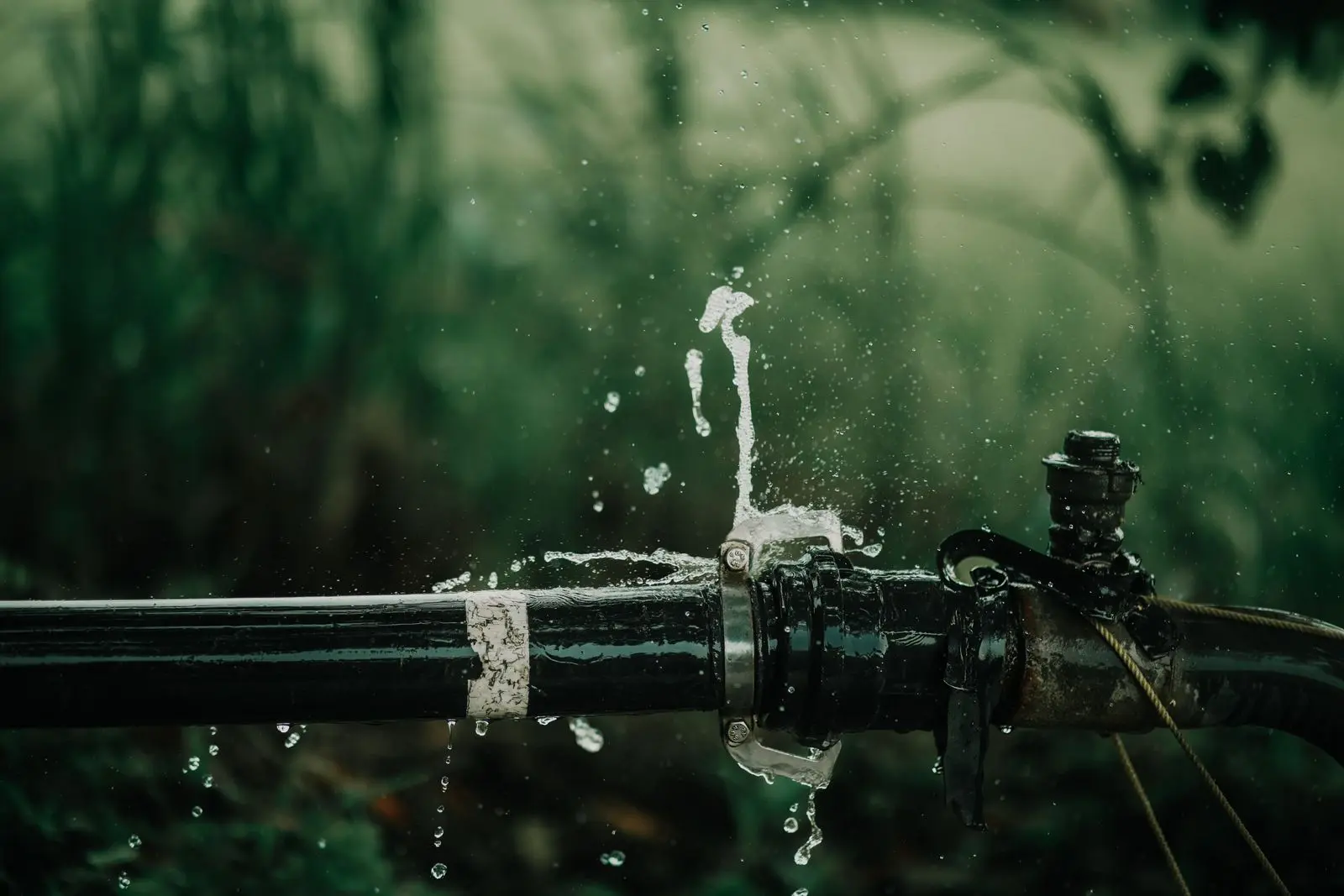
- Leave alone: a temporary clamp or tape on a main line - it may slow a leak for a few hours, but it is not a repair and it can hide the problem until the line fails again
Frequently asked questions
How do I know if the leak is in my main line or the city's?
Use the meter. Turn off all the water in the house, then watch the meter: if it moves, the leak is on your side of the meter and is yours to fix. If it is still and you have no water or low pressure, ask neighbors whether they have the same problem - if they do, the fault is probably in the street main and the water utility should be called.
Can I repair a main water line myself?
Most homeowners should not. The pipe is buried, so the repair means digging, and you need to know where the other utilities are before you dig. Plumbers also need to pressure-test the repair and, in many places, get a permit and an inspection. What you can do is shut off the water, document the damage and make the area safe.
How long does a main water line repair take?
It depends on how deep the line is buried and how much has to be replaced. A straightforward repair to a section that is already exposed can often be done in a day. A full replacement, a repair under a driveway, or work that waits on a utility locate or a permit will take longer.
Sources
- Call 811 before you dig, Common Ground Alliance
- Lead service lines, US Environmental Protection Agency
Editorial note: This guide is general information for homeowners, not a substitute for an on-site assessment. Local codes and conditions vary; a licensed pro can confirm what applies to your home. See our editorial policy.